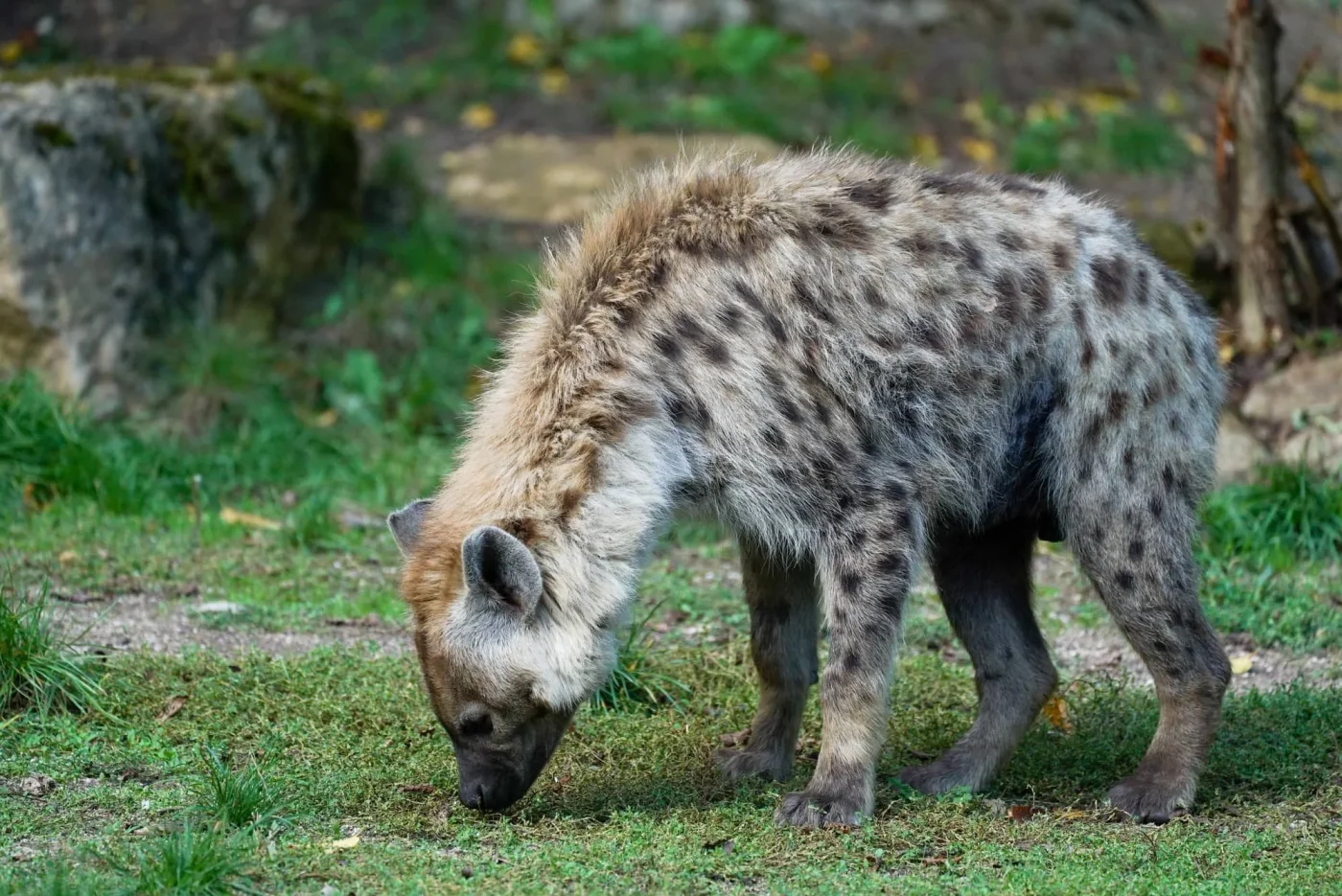
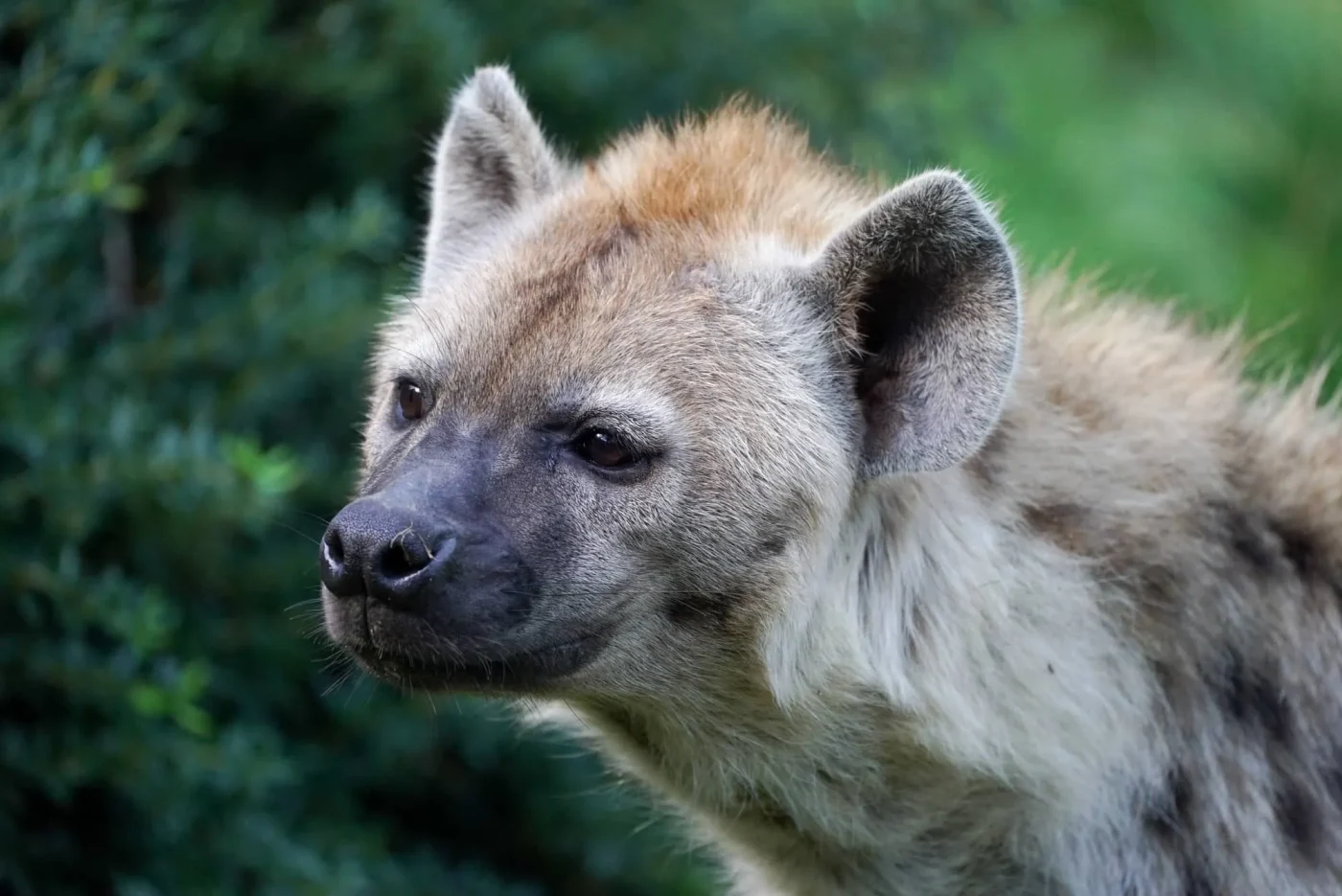
In spotted hyenas, the mating system is a polygyny, which means that one male can mate with several females, but a female only reproduces with one male.
Since females are dominant, males must carry out a sort of submission ritual to win the favor of females and be able to reproduce. Due to the particular anatomy of the females’ reproductive organ, mating is not easy. The males must slide their pelvis under the female to begin penetration. Then in a second phase, he mounts the female in a more conventional position.
Within a clan, all females can reproduce. However, high-ranking females reproduce earlier and have shorter intervals between litters. Furthermore, the mortality rate of the young is lower. These advantages are believed to result from privileged access to food resources.
After a gestation of about 4 months, the female gives birth to a litter of 1 to 4 young. The female gives birth in a den, often abandoned by another species such as the warthog, for example. During birth, the clitoris tears and only heals after a few weeks. At birth, the young weigh between 1 and 1.6 kg, have completely black fur, and already have their eyes open. Violent fights occur shortly after birth, which often results in the death of one of the young. Two to six weeks after birth, the female moves the young to a communal den shared by all the females in the clan. This helps develop social behaviors in the young. However, there is no shared care, meaning each female takes care of her own young.
They begin eating meat around 3 months and are weaned between 14 and 18 months. Very rare among carnivores, by this age the young will have already acquired all of their adult teeth. Sexual maturity is reached at around 3 years old. From then on, males leave their original group to join another clan, while females generally remain within their family. Females can produce a litter every 11 to 21 months.